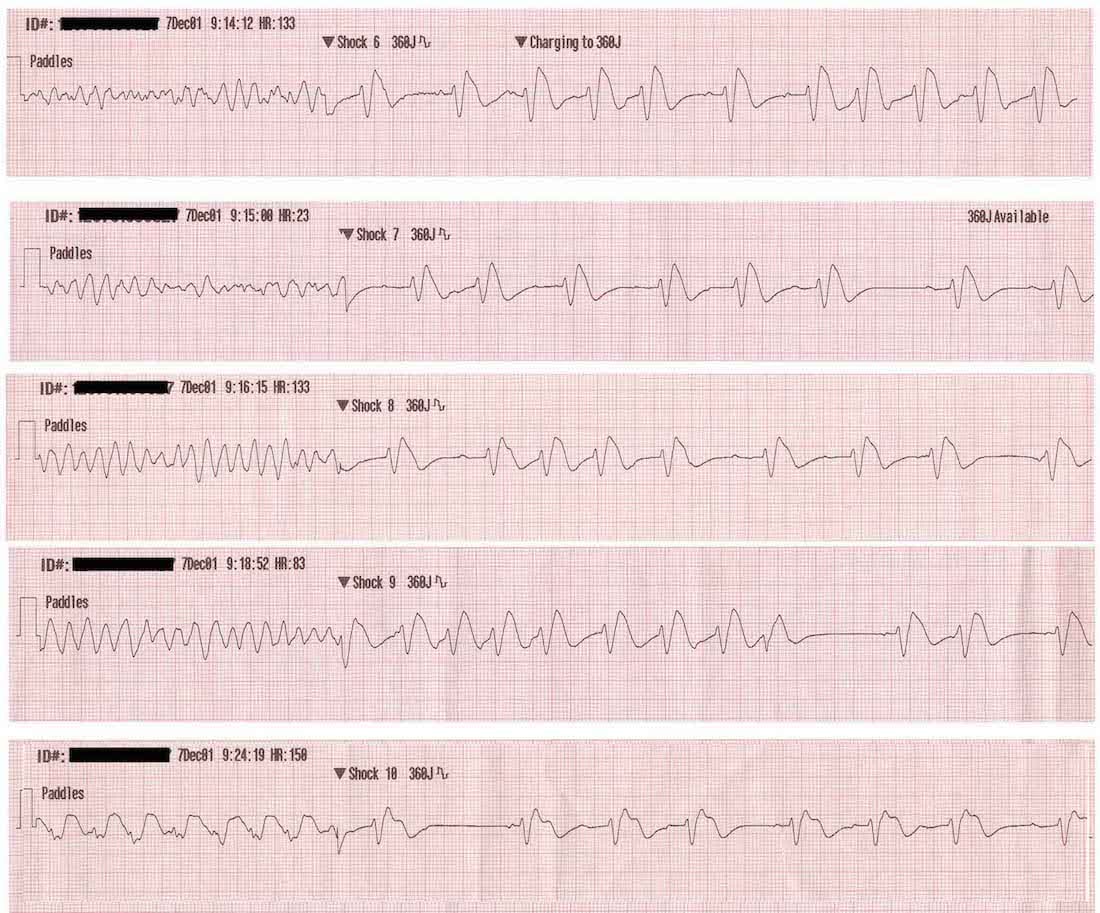
Ventricular Fibrillation V Tach Ekg

Ventricular Tachycardia Vt Ecg Review Criteria And Examples Learntheheart Com
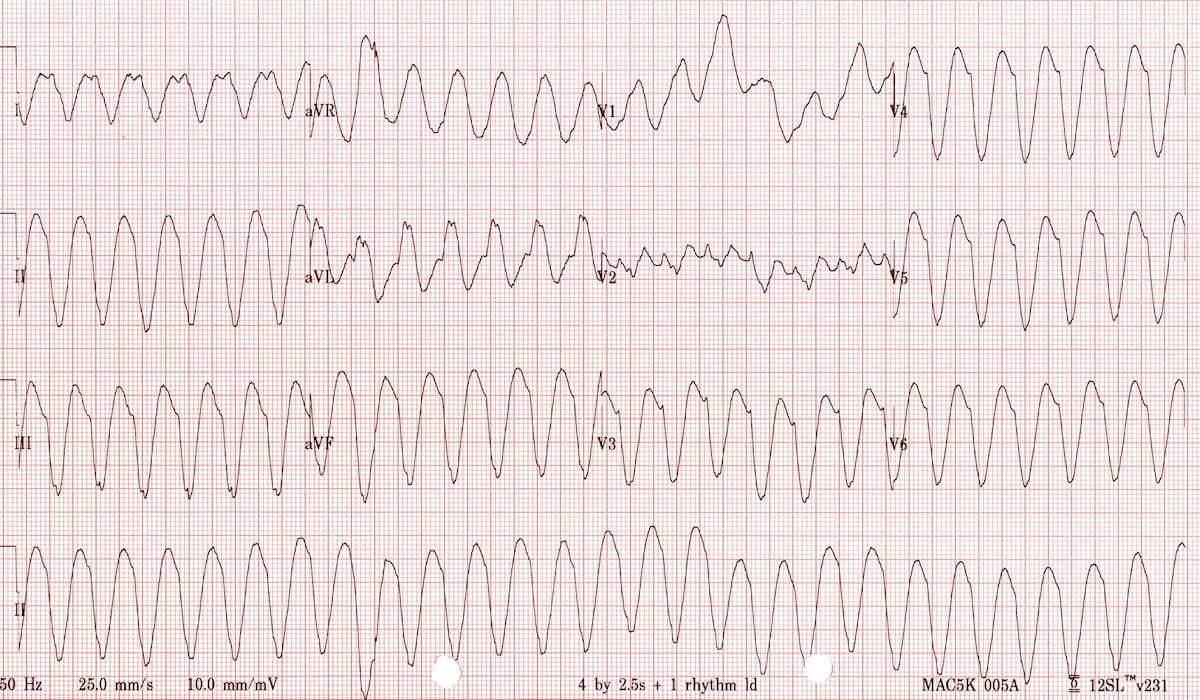
Ventricular Tachycardia Monomorphic Vt Litfl Ecg Library

Ventricular Tachycardia V Tach Or Vt Is A Type Of Regular And Fast

Emdocs Net Emergency Medicine Educationecg Pointers Ventricular Tachycardia Emdocs Net Emergency Medicine Education
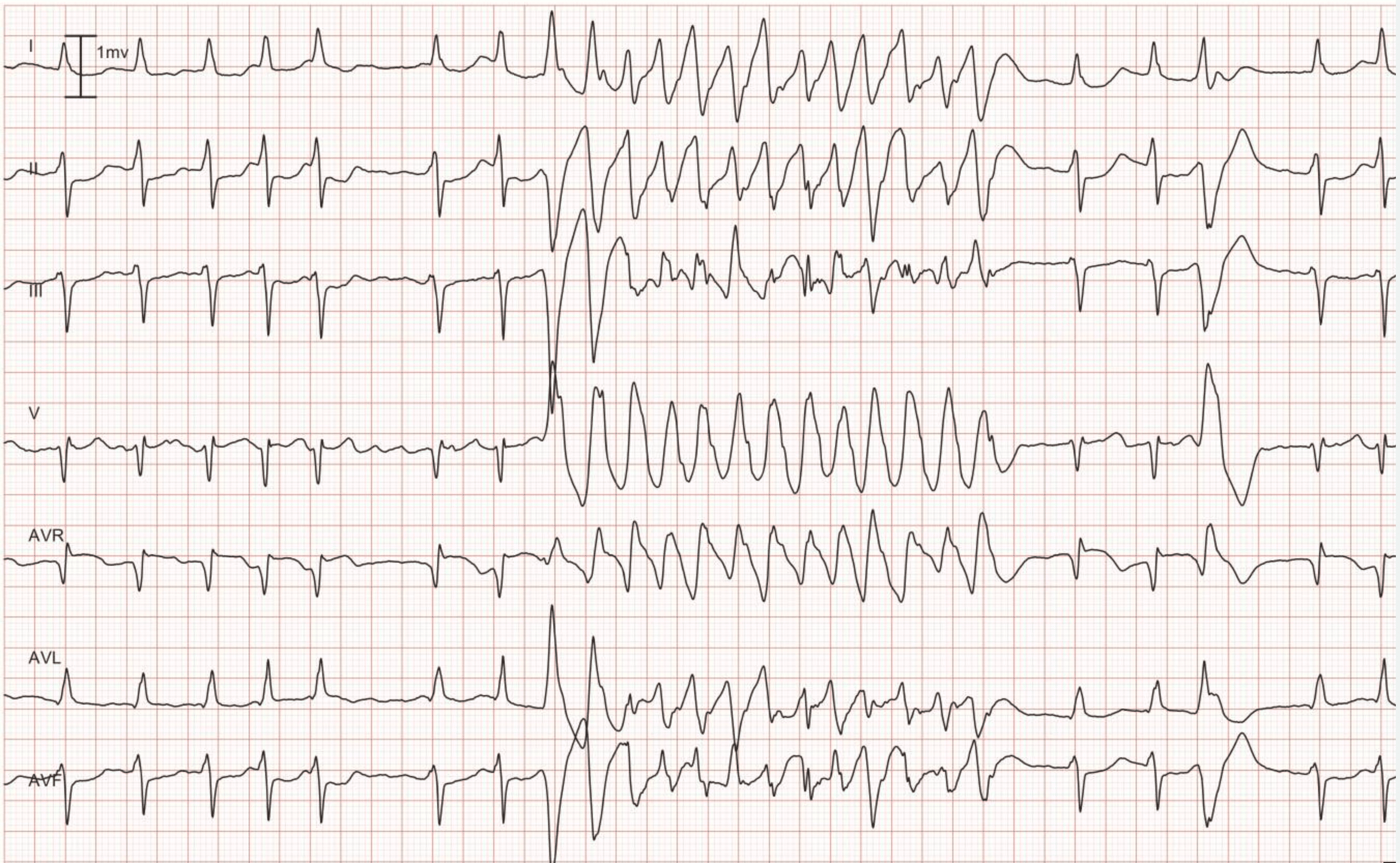
Ventricular Tachycardia Vt Ecg Criteria Causes Classification Treatment Management Ecg Echo

Difference Between Ventricular Tachycardia Vtach And Ventricular Fibrillation Vfib Difference Between
Ventricular tachycardia v tach or vt is a type of regular and fast heart rate that arises from improper electrical activity in the ventricles of the heart.
Ventricular fibrillation v tach ekg. The ecg allows for subclassification of ventricular tachycardia. Short periods may occur without symptoms or present with lightheadedness palpitations or chest pain. No normal ekg waves are present. Wide qrs complexes qrs duration 0 12 s.
Although there is a broad complex tachycardia hr 100 qrs 120 the appearance in v1 is more suggestive of svt with aberrancy given that the the complexes are not that broad 160 ms and the right rabbit ear is taller than the left. Ventricular tachycardia vs ventricular fibrillation arrhythmia means irregular cardiac rhythm and slow arrhythmias are called bradyarrhythmias and fast ones are called tachyarrhythmias there are various types of arrhythmias. Journal of the american college of cardiology 11 2 276 283. Ventricular fibrillation ventricular fibrillation originates in the ventricles and it chaotic.
Ventricular tachycardia with rate 250 beats per minute is referred to as ventricular flutter. Ventricular arrhythmias are abnormal heart rhythms originating in the ventricles that are the leading cause of sudden cardiac death. Ventricular fibrillation is an emergency condition requiring immediate action. In this video you will learn about ventricular arrhythmias and how to identify them on an ekg strip.
This rapid and irregular electrical activity renders the ventricles unable to contract in a synchronised manner resulting in immediate loss of cardiac output. Ventricular arrhythmias pvc s v tach v fib. However on closer inspection there are signs of av dissociation with superimposed p waves visible in v1. They are atrial tachycardia monofocal or multifocal atrial fibrillation atrial flutter atrioventricular nodal re entry tachycardia atrioventricular re entry.
Although a few seconds may not result in problems longer periods are dangerous. Types of ventricular tachycardia. Ventricular tachycardia with rate 100 to 120 beats per minute is referred to as slow ventricular tachycardia. This ecg is a difficult one.
Differences between patients with ventricular tachycardia and ventricular fibrillation as assessed by signal averaged electrocardiogram radionuclide ventriculography and cardiac mapping. No heart rate can be observed.

Ventricular Tachycardia With No Structural Heart Disease Recognition And Treatment The Cardiology Advisor

Acls Ventricular Fibrillation And Pulseless Ventricular Tachycardia Guide

Emcrit Idiopathic Ventricular Tachycardias For The Em Physician By H Pendell Meyers

Pin On Cardiology
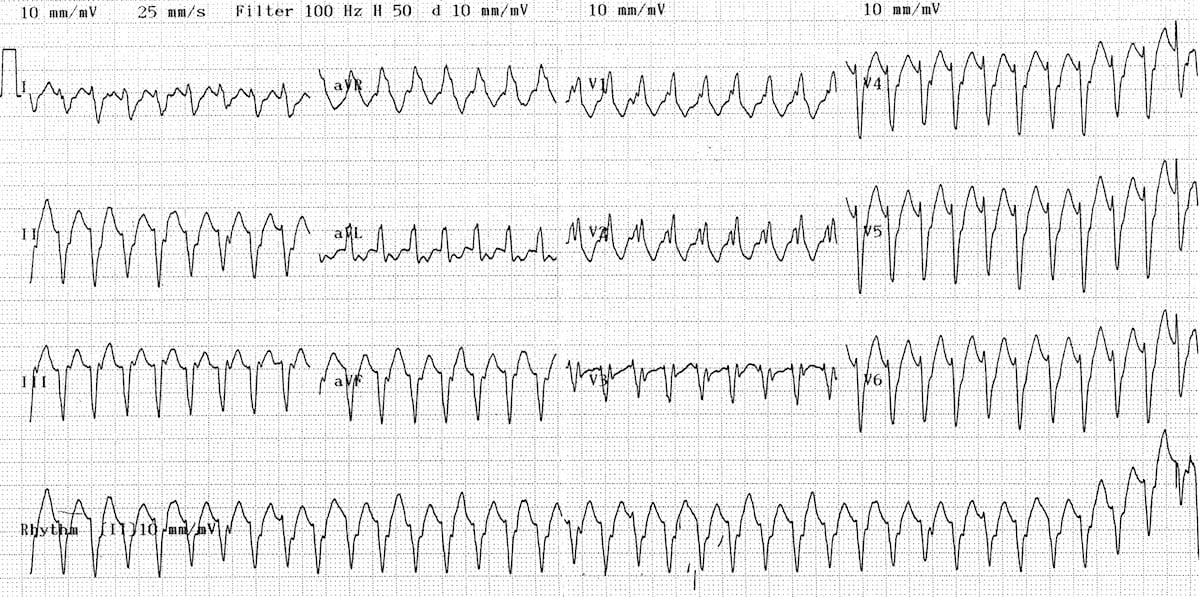
Ventricular Tachycardia Monomorphic Vt Litfl Ecg Library

First Line Treatment For Ventricular Tachycardia What The Guidelines And Evidence Say County Em
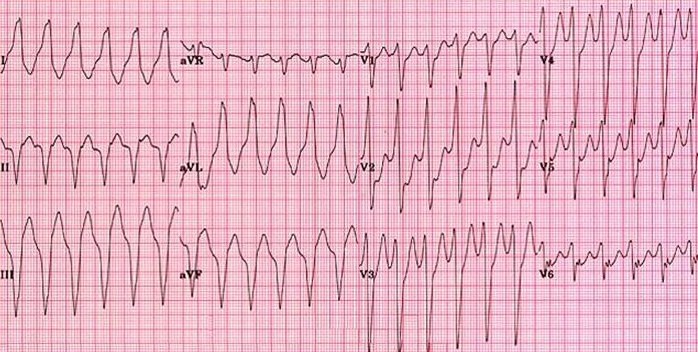
Ventricular Tachycardia
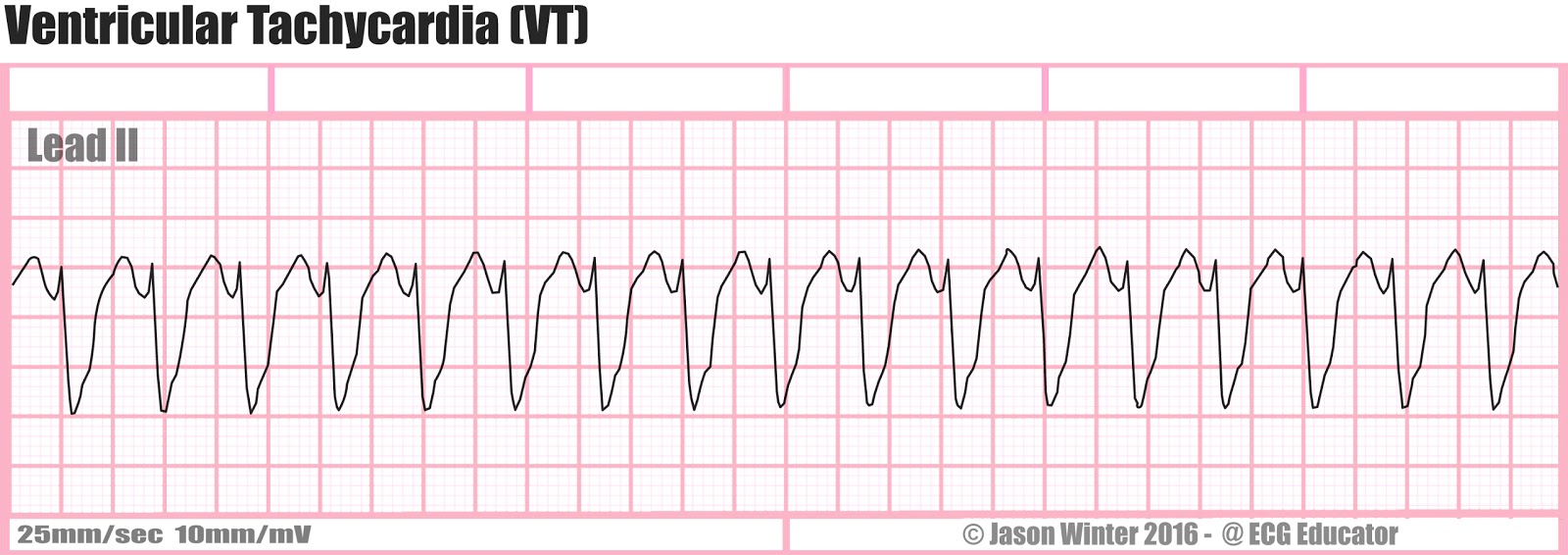
Ecg Educator Blog Ventricular Tachycardia Vt

Ventricular Tachycardia Cancer Therapy Advisor

Dr Smith S Ecg Blog Ventricular Fibrillation On A 12 Lead Ecg

66 Yo With Syncope Ventricular Tachycardia This Ecg Shows A Wide Complex Tachycardia
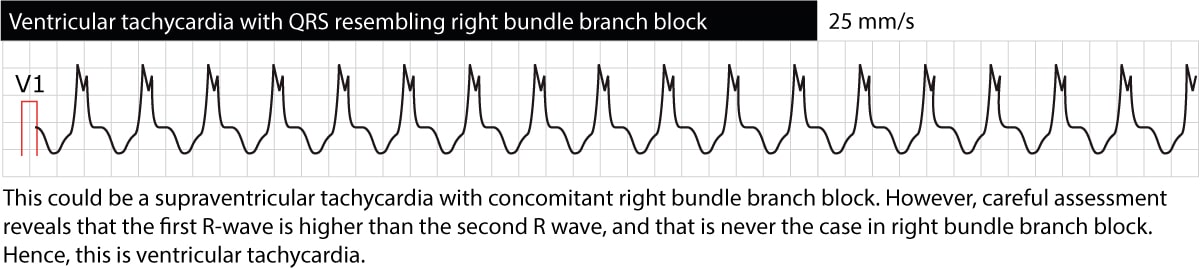
Ventricular Tachycardia Vt Ecg Criteria Causes Classification Treatment Management Ecg Echo
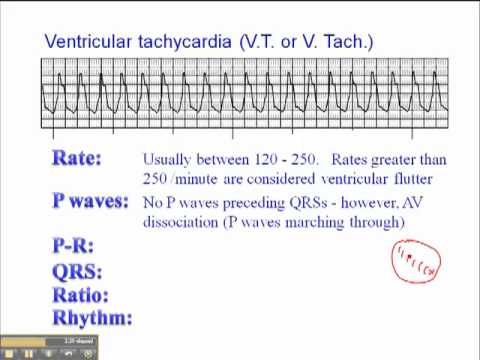
Ecg Ventricular Tachycardia Vt Youtube