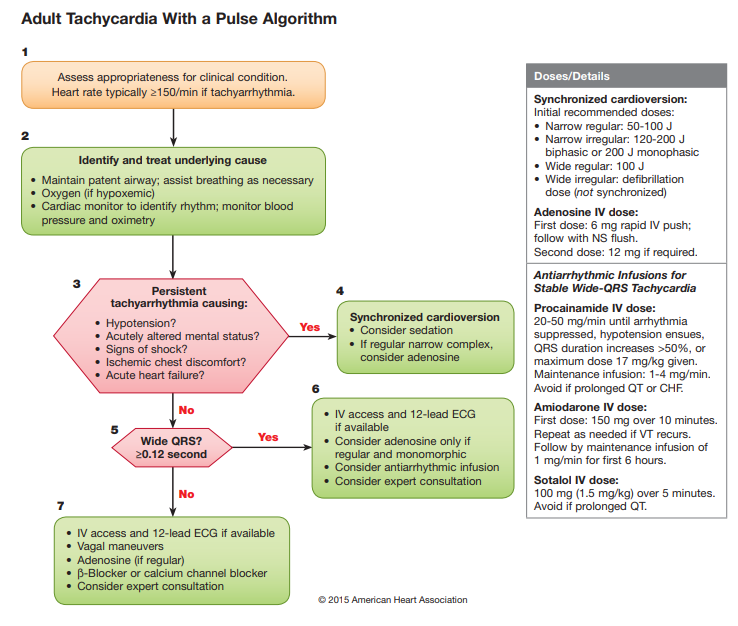
V Fib Pulseless V Tach Algorithm
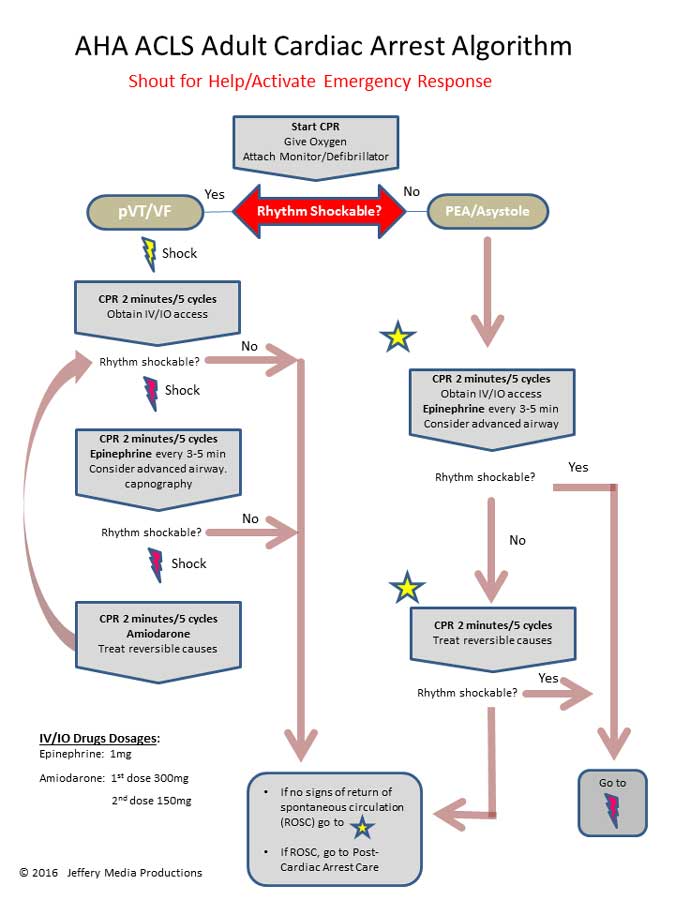
Vf And Pulseless Vt Acls Algorithms Com

Acls 2010 Algorithm Review V Fib Pulseless V Tach Youtube
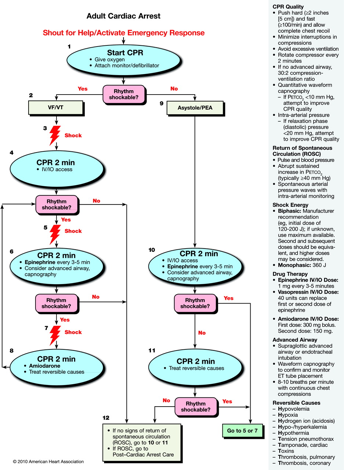
Course Postgradfamilypractice Examprep 99 Priority Topics Acls Ubc Wiki

Pin On How To Nurse Resource

Part 7 2 Management Of Cardiac Arrest Circulation

Cardiac Arrest Algorithm Acls Com

Cpr for 5 cycles 2 minutes.
V fib pulseless v tach algorithm. And third the rhythm originates in the ventricles. Vf and pulseless vt are shockable rhythms and treated in similar fashion. The treatment of such an arrhythmia is included in the acls pulseless arrest algorithm. Pulseless ventricular tachycardia vt is included in the algorithm with ventricular fibrillation vf.
The pulseless arrest algorithm follows after the primary survey has already been conducted. First the rate is usually greater than 180 beats per minute and the rhythm generally has a very wide qrs complex. The pulseless ventricular tachycardia rhythm is primarily identified by several criteria. Check rhythm if not shockable move to asystole pea rhythm protocol if.
Asystole and pea are also included in the cardiac arrest algorithm but are non shockable rhythms. Rhythm is shockable ventricular fibrillation or unstable ventricular tachycardia 1. Ventricular fibrillation is a shockable rhythms and is treated in a similarly to ventricular tachycardia vt. Activate emergency medical services call a pediatric code blue obtain aed or defibrillator 2.
Administer high quality cpr for 2 minutes 3. The appropriate cardiac arrest algorithm to use for pulseless ventricular tachycardia vf. For treatment purposes pulseless vt is treated the same as ventricular fibrillation. Second the patient will be pulseless.
Ventricular fibrillation and pulseless ventricular tachycardia are treated using the left branch of the cardiac arrest arrest algorithm. If the rhythm changes to a v fib or v tach shockable rhythm move to that algorithm and prepare to shock the patient. If the patient shows signs of return of spontaneous circulation or rosc administer post cardiac care. Pals cardiac arrest algorithm 1.
Cpr 2 min. The pulseless arrest algorithm has been established as the best practice in treating ventricular fibrillation. One shock defibrillate 120 to 200joules biphasic or 360joules monophasic one time if still in v. The emergency response system has been activated.
If a nonshockable rhythm is present and there is no pulse continue with cpr. If diastolic pressure during cpr with an arterial line is 20 mmhg then cpr quality needs to improve.

V Fib And Pulseless V Tach Algorithm Acls Algorithm Acls Nursing School Notes
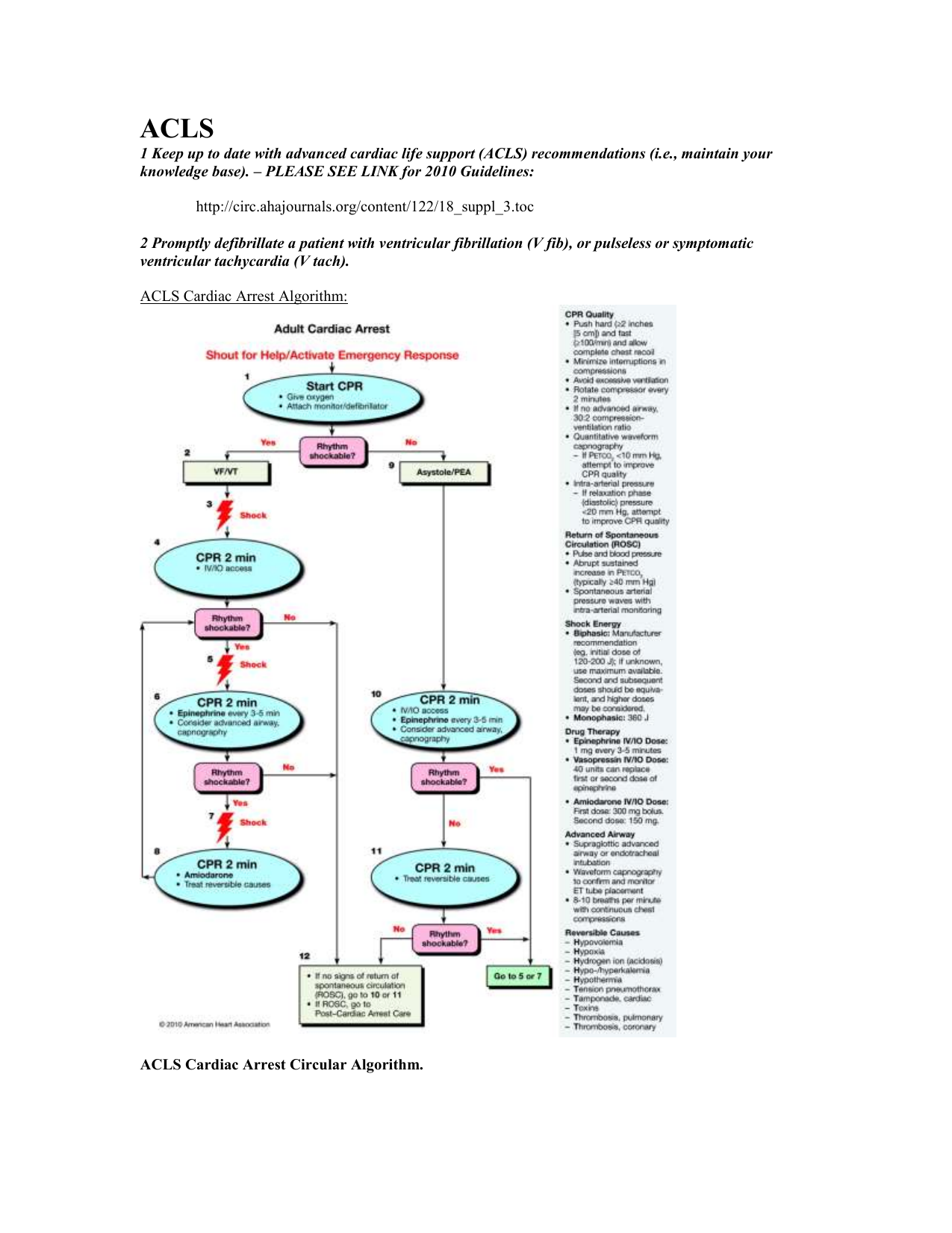
Acls Ubc Wiki

Pulseless Arrest Ventricular Fibrillation Ventricular Tachycardia Review Youtube
Https Www Ahajournals Org Doi Pdf 10 1161 Cir 0000000000000613

Acls Algorithm For Pulseless Vt
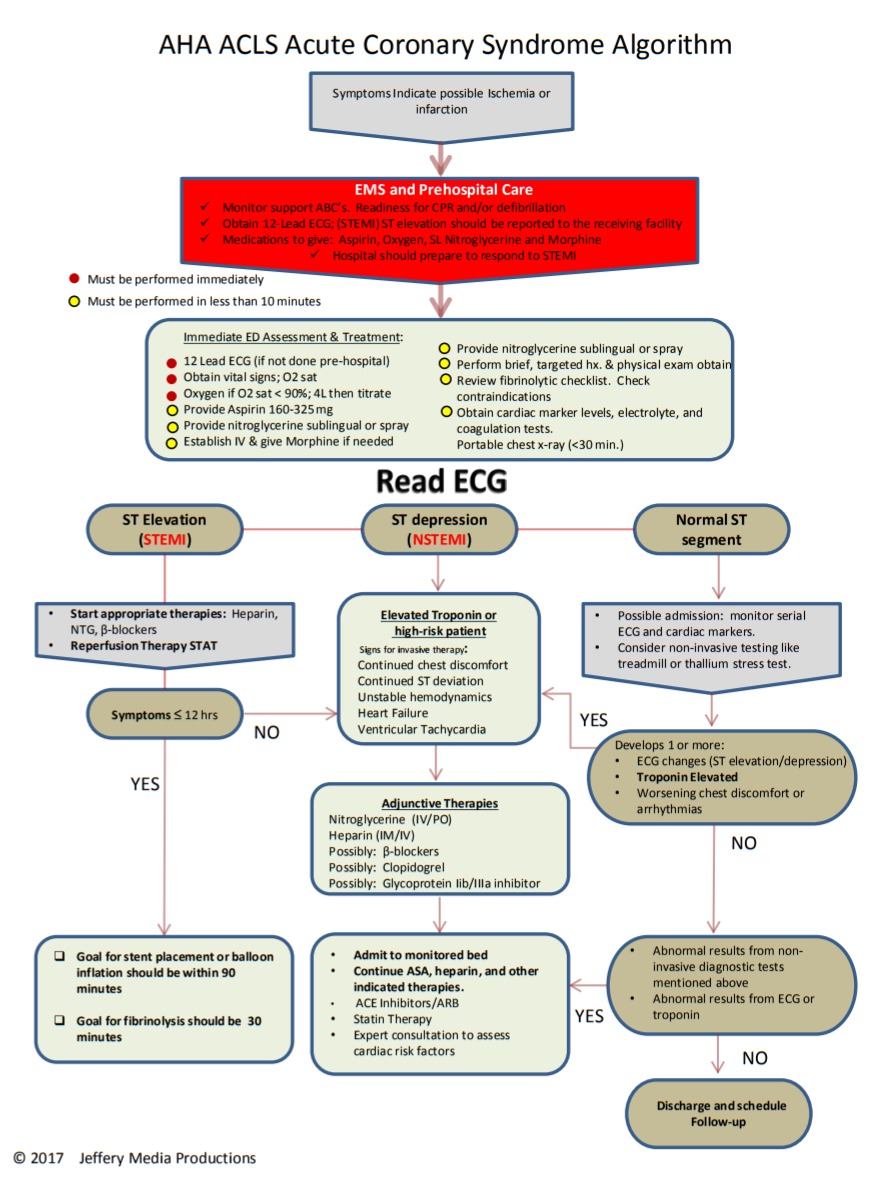
Acls Algorithm Overview Acls Algorithms Com

Pin By Amie Fowler On Work Acls Algorithm Acls Emergency Nursing
Quotes About Algorithm 53 Quotes

Acls Vt V Fib Algorithm By Nik Nikam Md Youtube

Free 2020 Acls Study Guide Acls Made Easy
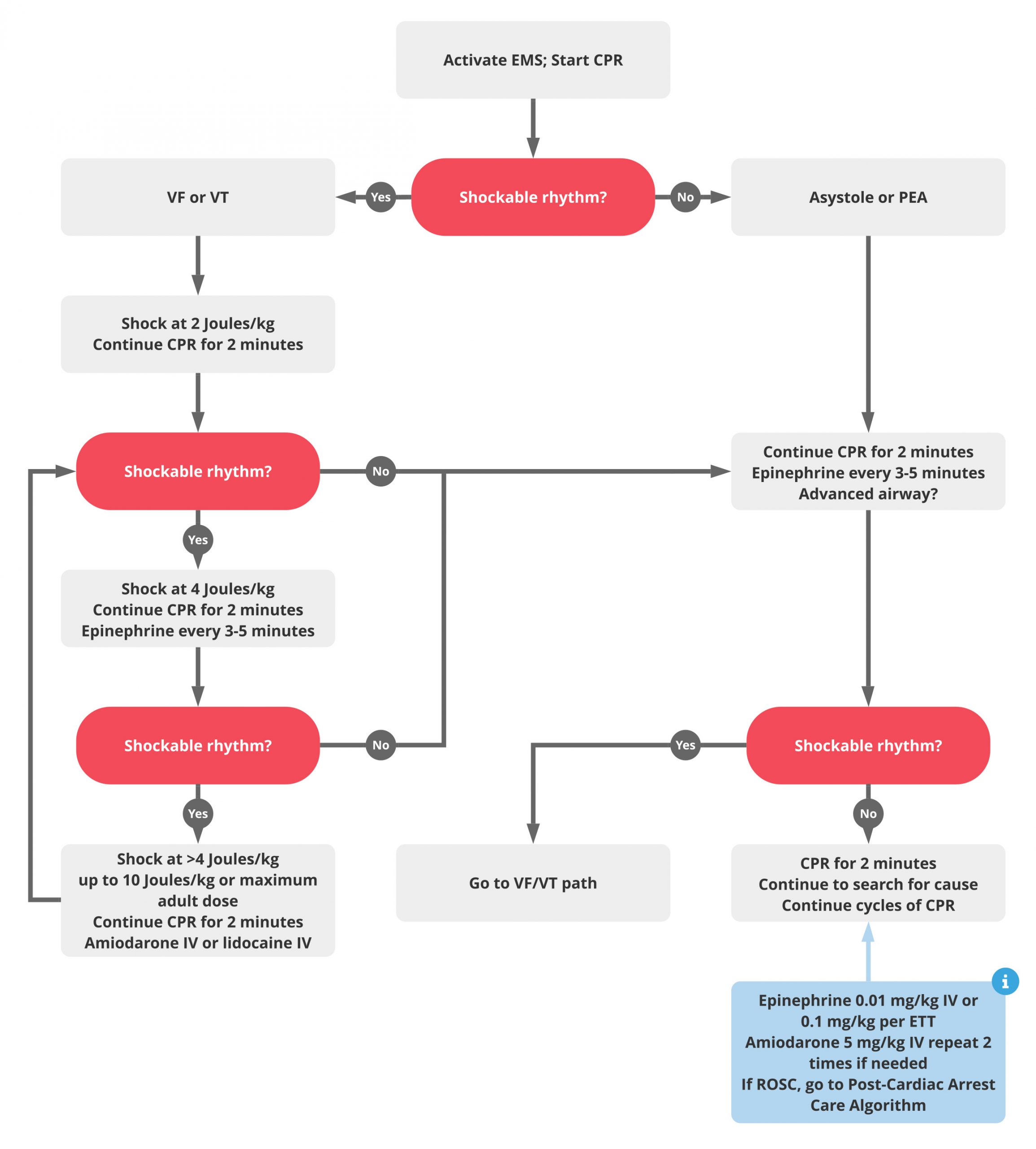
Pals Cardiac Arrest Algorithm Acls Medical Training

Acls Ventricular Fibrillation And Pulseless Ventricular Tachycardia Guide

Adult Advanced Life Support Algorithm Cpr Cardiopulmonary Download Scientific Diagram